Color Theory · 4 min read
What Is a Color Season and Why Does It Matter?
If you've ever bought a sweater you adored on the shelf and looked drained the moment you put it on, you've already met the problem that color seasons solve. The colors near your face either reinforce your natural pigmentation or fight it — and the difference is usually visible to a stranger across the room before it's visible to you in the mirror.
The four-season foundation
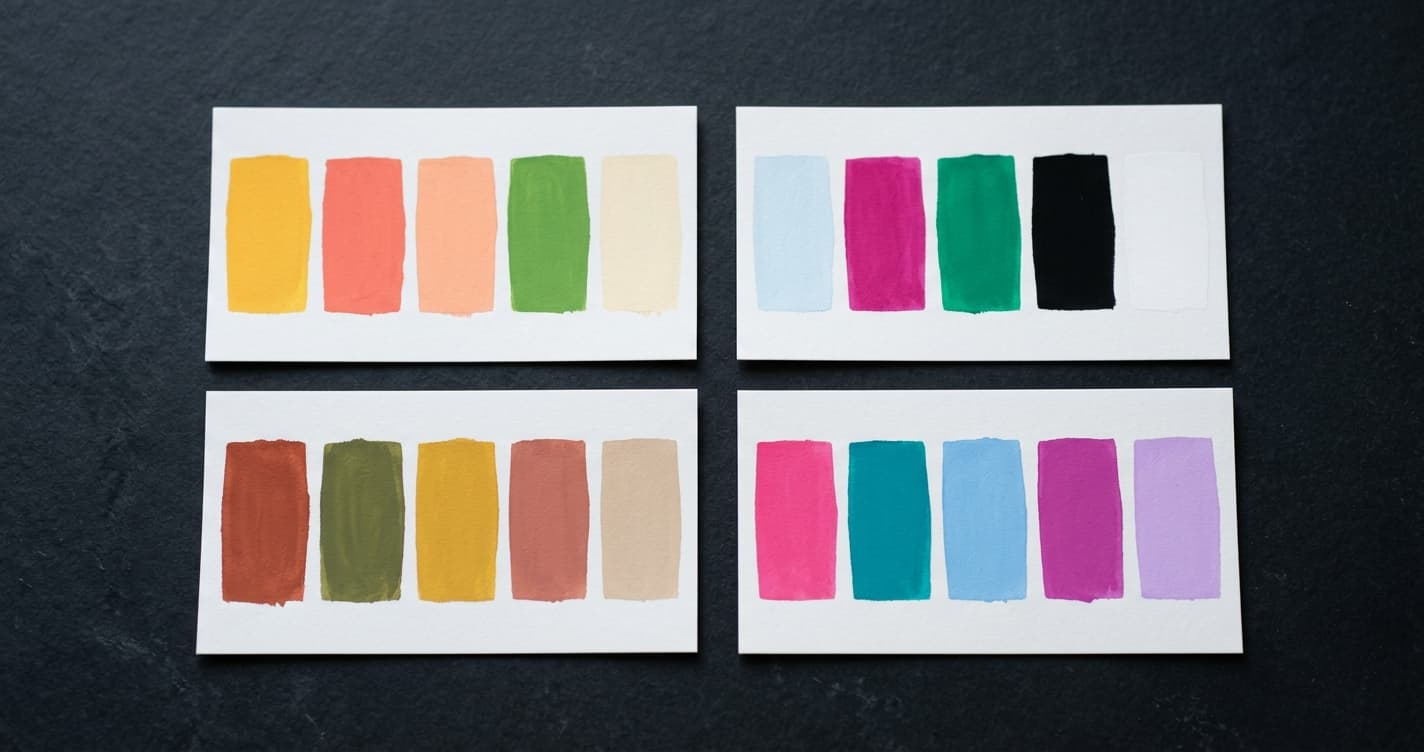
The original system, developed in the mid-twentieth century and popularised by Carole Jackson's “Color Me Beautiful,” sorts people into Spring, Summer, Autumn, and Winter based on three properties of their natural coloring: undertone (warm vs. cool), value (light vs. dark), and chroma (soft vs. clear). Each season corresponds to a coherent palette where those three properties line up with your own.
Why twelve, not four
Real human coloring rarely sits in the middle of a season. A Winter can lean Bright (high chroma) or Deep (low value); a Spring can be Light, Warm, or Clear. The modern 12-season system splits each parent season into three sub-seasons, giving you a palette tuned to which property dominates rather than a generic one. The difference between Bright Winter and Deep Winter is the difference between looking electric and looking tired in the same black blazer.
What the palette actually changes
Wearing colors from your season makes your skin look more even, your eyes brighter, and reduces the visual weight of dark circles or redness. Wearing the wrong palette tends to amplify whatever you were hoping to downplay. The same logic applies to metals (silver vs. gold vs. rose gold), hair color, and even glasses frames — everything within roughly thirty centimetres of your face is part of your color story.
How AI fits in
Traditional color analysis is done by draping fabric swatches in natural light and watching how a face responds. It's accurate but slow, expensive, and subjective. A vision model can read the same signals — undertone in the cheek, contrast between hair and skin, eye chroma — from a single photo and assign a sub-season in seconds. Objektiv's analysis tells you not only your season, but the three driving features behind that classification, so you can sanity-check the result yourself. You can read more about how we score the rest of your appearance in The Science Behind Facial Harmony Scores or learn about hair pairing in How AI Can Help You Find Your Best Hairstyle.
What to do with your season
Once you know your sub-season, you can audit your wardrobe one piece at a time. Objektiv's closet feature scores every item you upload as “perfect,” “works,” or “clashes” against your palette, so you can stop guessing and start rotating in a few intentional pieces a month. Curious how the platform thinks about this end-to-end? See the About page or check pricing.
Find your color season today
Three free analyses per month. No credit card required.
Try Objektiv freeLast updated: April 25, 2026