Color Theory · 7 min read
Skin Undertone: Why the Vein and Jewelry Tests Disagree
Free, no account needed. Try it free
Short answer
Your undertone is the slight lean of your skin toward red or toward yellow, separate from how light or deep it is, and cosmetics marketing calls the redder lean cool and the yellower lean warm. The home tests often disagree. A vein, for one, looks blue or green through contrast with the skin around it, not through its own color. When you pick a foundation, dab a little of each shade near your depth on your jaw, check them in daylight from a window and take the one that blends in.
Your veins look blue and green, and both metals suit you
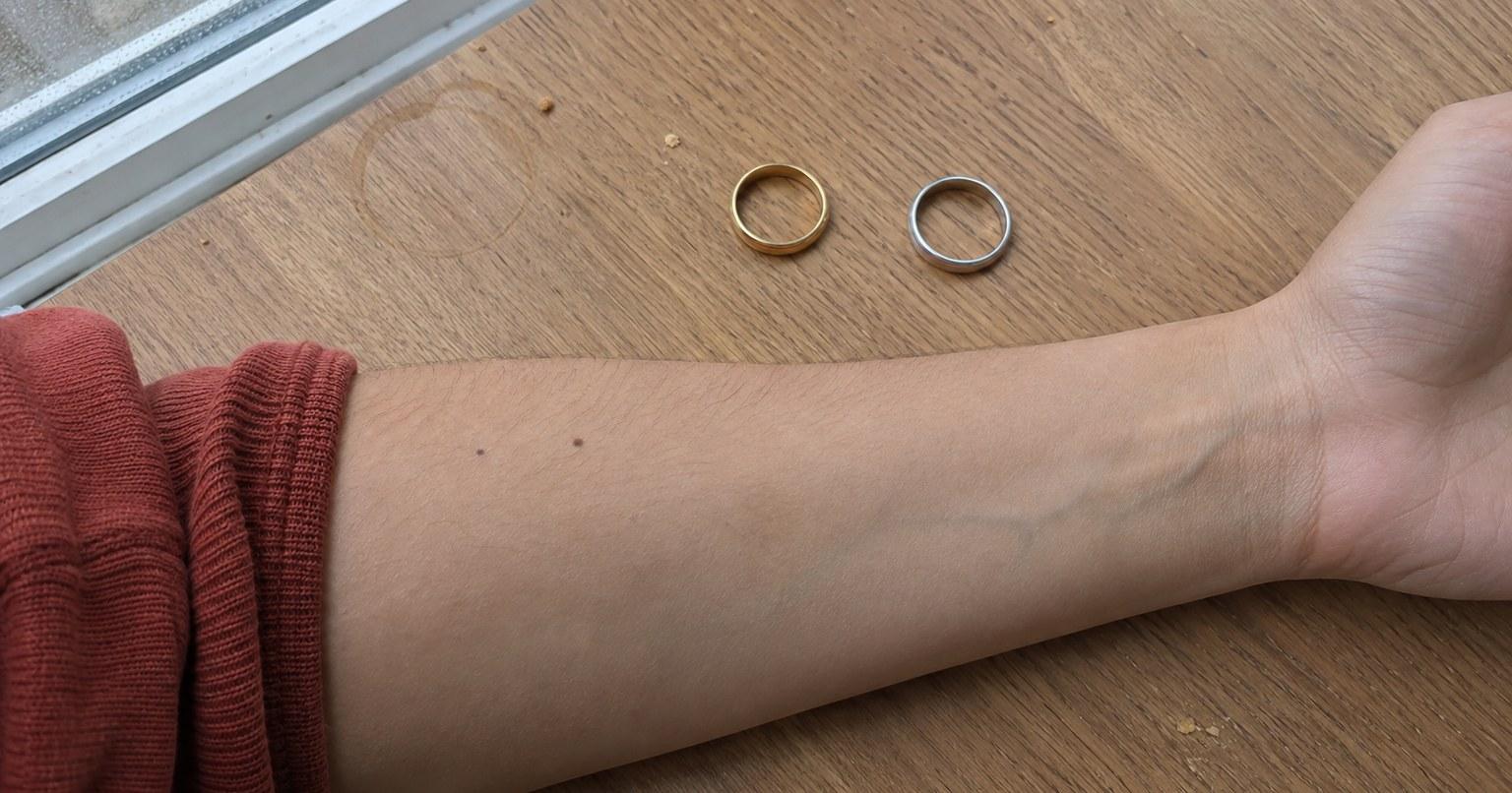
Under the lamp, the veins on your wrist look blue in one spot and green in the next. Gold and silver both look fine against your face. We at Objektiv, the photo analysis app behind this blog, read 573 Reddit posts about undertone. Of those, 100 bring up the vein test, and in 57 of the 100 the veins look like more than one color or the poster cannot tell.
A foundation shade, a color palette and a color season (the spring, summer, autumn or winter group your coloring falls into) all depend in part on the warm or cool call.
A mixed result does not mean you did the tests wrong. Some of them look at something other than your undertone.
What an undertone is, and what it is not
Depth and undertone are two different things
Skin color has two parts. The first is depth, how light or deep your skin is. Melanin, the skin's brown pigment, sets most of it (Alaluf and colleagues, 2002).
The second part is a lean from red toward yellow. Researchers measure it on a color scale that splits lightness from redness and yellowness (Ly and colleagues, 2020). Studies describe it as a hue angle, a number that rises as skin leans more yellow than red (Thong and colleagues, 2023).
Warm and cool are shop words
Skin is always a little red and a little yellow at once. Cosmetics marketing calls the redder lean cool (pink, rose) and the yellower lean warm (peach, gold) (Branigan and colleagues, 2024). The research we read speaks of redder and yellower skin instead.
A flush is not your undertone
Redness rises and falls with blood flow and emotion, while yellowness stays steadier, as Branigan and colleagues suggest. Over weeks, diet moves skin color too. In 35 students, almost all of them white, a change in fruit and vegetable intake over six weeks went with a change in skin redness and yellowness that tracked carotenoids, pigments in those foods (Whitehead and colleagues, 2012).
A flushed cheek can make warm skin look cool for a moment.
Why the home tests give you different answers
Veins
Among color chips, the closest match to the skin over a hand vein was yellowish-gray. The blue look appeared when more of the skin around the vein was in view, a contrast effect (Reisfeld, 2000). A vein's color also depends on how deep and wide it is and how much oxygen the blood carries (Kienle and colleagues, 1996).
The wrist is not your face
In one comparison, the cheek read considerably redder than the inner arm, while lightness and yellowness stayed fairly close (Gordon and colleagues, 2024). Foundation goes on your face, so a wrist reading starts from the wrong skin.
Gold, silver and judging by eye
Branigan and colleagues (2024) found that single raters agreed well on how light skin was and poorly on the red-to-yellow lean, with reliability scores above .80 and below .30 on a scale where 1 means full agreement. Only the average of many raters became reliable. That is how two shop assistants give you two calls.
No study we found has checked the white paper test (a sheet held next to your face) or the jewelry test as an undertone test, so neither should pick your foundation.
How the light in a room or a photo shifts what you see
One skin, two lights
2856K
Old-style tungsten bulb
under the bulb, camera fixed to daylight
6500K
Average daylight
the same skin, in daylight
An old-style tungsten bulb sits at about 2856 kelvin and average daylight at about 6500 kelvin, according to the CIE, an international standards body for light and color. On this color temperature scale a lower number means a warmer light, and the same skin looks warmer under the bulb.
Photo-based skin tone ratings varied with lighting (Weir and colleagues, 2025), and phone camera angle shifted the color of skin tone swatches in photos (Cronin and colleagues, 2023).
Skin hue and the warm or cool call in 12 example faces
On 12 example faces, the warm or cool call and the measured hue angle did not line up. Some faces called cool measured a higher hue angle than some called warm, so this article asks you to trust neither one number nor one call. The faces are the portraits on Objektiv's example pages, not a sample of anyone, and an Objektiv analysis called seven of them cool and five warm, without the skin measurements we took separately on the same photos.
What the undertone is actually used for
Foundation
Match depth first, then the lean. In a study of paired skin color swatches, observers judged a difference in lightness more harshly than a difference in undertone (Hoffman and colleagues, 2020).
Colors worn near the face and the color season
The undertone is one input, next to contrast (the difference in lightness between your skin, hair and eyes) and how clear or soft your coloring is, meaning how vivid or muted. That is why a season is more than warm or cool. For colors to wear near your face, the post on color analysis and the 12 seasons explains where the seasons come from and how to use yours. The daylight check at the end is for a foundation shade.
Why no group average tells you your undertone
A group you belong to says little about your own undertone. Across 14,532 skin measurements, taken on several body sites of people in eight groups, average redness barely differed between the groups and yellowness differed more, yet the spread within each group was often larger than the gaps between them (Lu, Xiao and colleagues, 2026).
Check your foundation shade in daylight
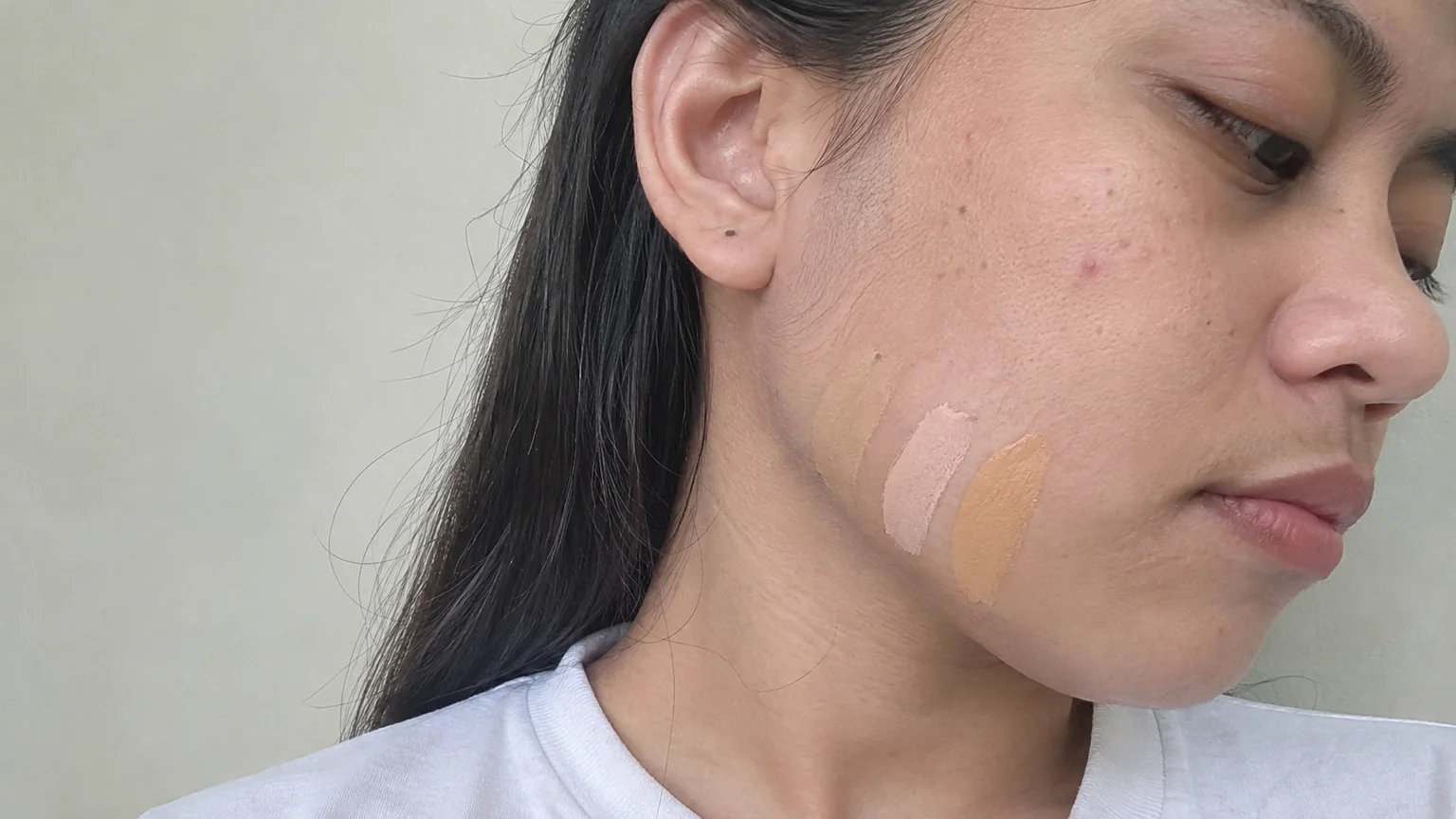
Skip the vein test. Swatch shades near your depth on your jaw and check them in daylight from a window. Keep the one that blends in, with no line where the swatch ends. Only if two blend in, let the lean decide, since one person's eye judges depth better than the lean. If your bare face looks more pink than peach when not flushed, take the cooler of the two, otherwise the warmer.
For one more opinion, the free color analysis reads your undertone, contrast and clear or soft coloring from one photo, and asks for a new one when the light is too warm or dim.
Frequently asked questions
Is olive an undertone?
Not in the studies we read. Some skin disease studies use olive as a step from light to deep, darker than fair or medium and lighter than brown (Frost and colleagues, 1998, el Khwsky and colleagues, 1994). Cosmetics marketing sometimes calls olive warm (Branigan and colleagues, 2024). Either way, pick a foundation that blends in on your jaw in daylight.
Is neutral a real undertone?
Neutral is a fair name for skin where neither lean stands out. Skin always carries both leans (Branigan and colleagues, 2024), so warm and cool are a matter of degree.
Does a tan change my undertone?
On the face, a tan mostly reads deeper, not more golden. In 103 students in China, two weeks of sun lowered lightness while yellowness held everywhere (Jiang and colleagues, 2022).
This article is general information, not medical, legal or financial advice.
Get one more opinion on your undertone
Run a free color analysis, one reading per person. The photo is deleted once it is read.
Last updated: November 12, 2026