Face · 7 min read
Face Shape: Why Quizzes Disagree and What the Label Is For
Free, no account needed. Try it free
Short answer
Face shape labels compare the widths of your forehead, cheekbones and jaw with the length of your face. Quizzes, apps and friends draw the borders between shapes in different places, so a face can be oval to one and square to another. Look at a straight photo taken from about 1.5 meters, keep two labels if you sit between them, and tell your barber which part of your face is widest.
Why one face gets three labels
A quiz said oval, an app said square and a friend said round.
Most charts look at the widths across your forehead, cheekbones and jaw, at the length of your face, and at whether the corners of your jaw look angular or soft. Faces vary smoothly on all of these. The labels are boxes laid over that range, and each chart puts the borders where its author chose.
People who label faces for research do not agree either. In a large set of celebrity photos, two people labeled the same 1,000 images on their own and disagreed on the tag "oval face" for 466 of them (Wu and colleagues, 2023). Valladares and colleagues (2025) studied face-shape categories used in forensic identification. Their 16 observers sorted 60 faces by shape and agreed little more often than chance would predict, with broad consensus only on round and oval. A 2019 paper posted without peer review found that across 21 websites, 62 of the 117 female celebrities cited at least twice were given conflicting shapes.
How to check your face shape yourself
Where the phone goes
- About 1.5 m, the distance to use.
- 45 cm, arm's length. Faces came out narrower for their height.
- Take a straight photo from about 1.5 meters. Face the camera with your head level. Ask someone to take it, or prop the phone up and use a timer, and zoom in until your head fills most of the frame. Faces photographed at 45 cm came out narrower for their height than the same faces at 135 cm (Bryan and colleagues, 2012).
- Pull your hair off your forehead and away from your jaw. Note where your hairline sits. With a beard, use a clean-shaven photo if you have one.
- Look at the three widths and the length. Ask yourself which is widest, forehead, cheekbones or jaw. Look at the jaw corners, angular or soft. Then ask whether your face, from hairline to chin, looks about as wide as long, longer than wide, or clearly longer than wide. If your hairline sits high, has receded or you cannot tell, look from where your forehead begins to curve back. Hair loss with age makes the hairline the most variable point on the face, so a 2020 study left it out of face height (Skomina and colleagues).
- Pick the nearest label from the list below. The list describes how a face looks and gives no numbers, so judge by eye. If two fit, keep both and name both to your barber or optician.
What each label claims
- Oval: longer than wide, cheekbones the widest part, forehead and jaw slightly narrower, jaw soft.
- Round: about as wide as long, cheekbones the widest part, jaw soft.
- Square: about as wide as long, jaw close to the width of forehead and cheekbones, jaw corners angular.
- Oblong: clearly longer than wide, with forehead, cheekbones and jaw at similar widths.
- Heart: forehead the widest part, jaw tapering to a narrow chin.
- Diamond: cheekbones clearly the widest part, forehead and jaw both narrower.
- Triangle: jaw the widest part, forehead the narrowest.
What 12 example faces show
On 12 example faces, the labels and the measured proportions only partly agree. The faces are the portraits on the examples page of Objektiv, our face analysis app, and not a sample of anyone. The app labeled five of them oval, three oblong, two square and two between oval and round. Those labels were made without the numbers below, which we measured separately on the same front photos. Two of the numbers matter here, each a length or a width divided by the cheekbone width. The length stops partway up the forehead, below the hairline, so a high hairline does not stretch it.
- Face length against cheekbone width runs from 1.192 to 1.302.
- Jaw width against cheekbone width runs from 0.751 to 0.821, so every jaw is about a fifth to a quarter narrower than the cheekbones.
On this length the shortest face (1.192) is still about a fifth longer than wide, and it is labeled oval to round. The two square faces rank sixth and seventh of the 12 by length (1.222 and 1.236).
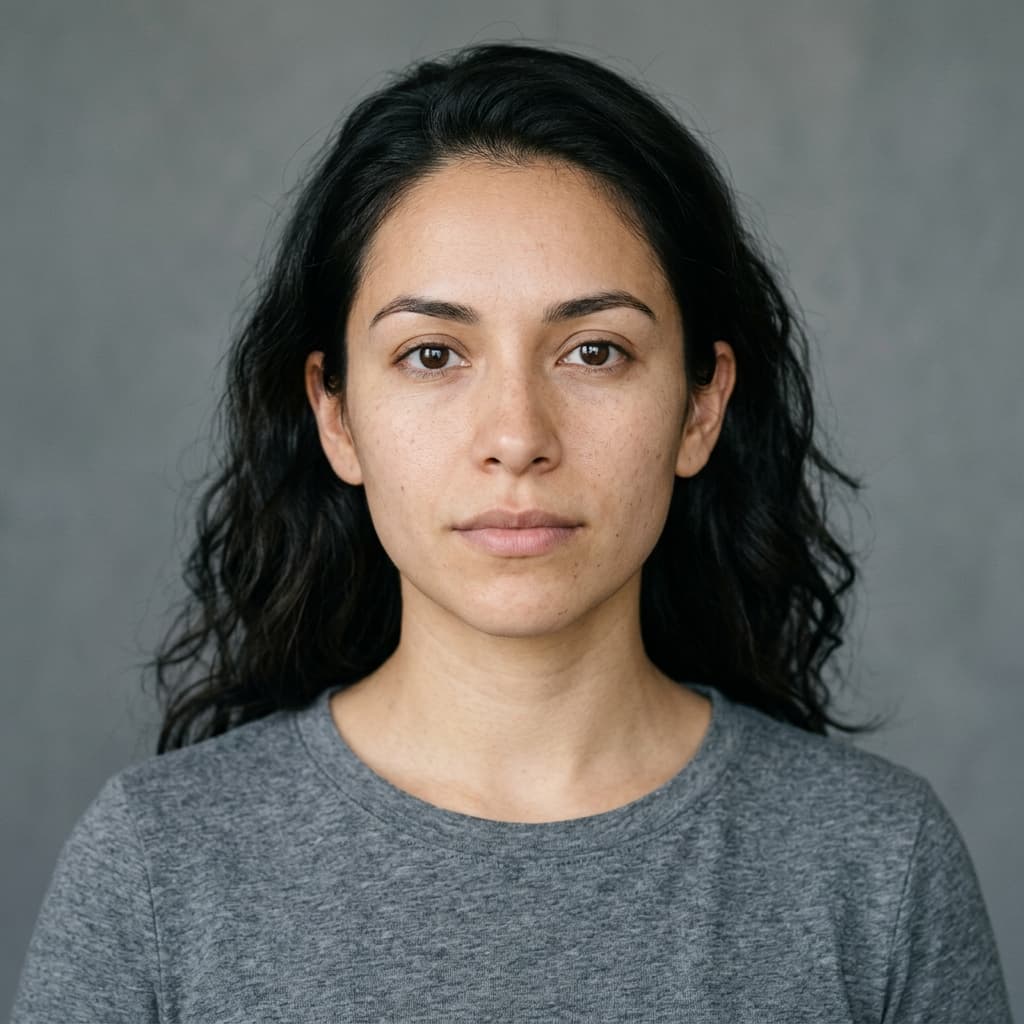
Kai Johansson is labeled oblong and Sofia Reyes oval, yet both have the same length ratio, 1.218, and oblong is the longer label. On this length Kai's face is a little shorter than both faces labeled square.
Diego Morales, labeled round to oval, has the highest jaw ratio of the 12 (0.821), a little higher than the two faces labeled square (0.816 and 0.807).
Twelve faces, measured and labeled
Jaw width against cheekbone width
Face length against cheekbone width
- Oblong, 3
- Oval, 5
- Square, 2
- Oval to round, 2

Kai Johansson
Labeled oblong
Sofia Reyes
Labeled oval
1.218, the length ratio both faces share.
The two longest faces (1.302 and 1.271) are both labeled oblong. But Diego's face, labeled round to oval, comes next at 1.270, almost level with the second oblong face.
What the label is good for, and what it is not
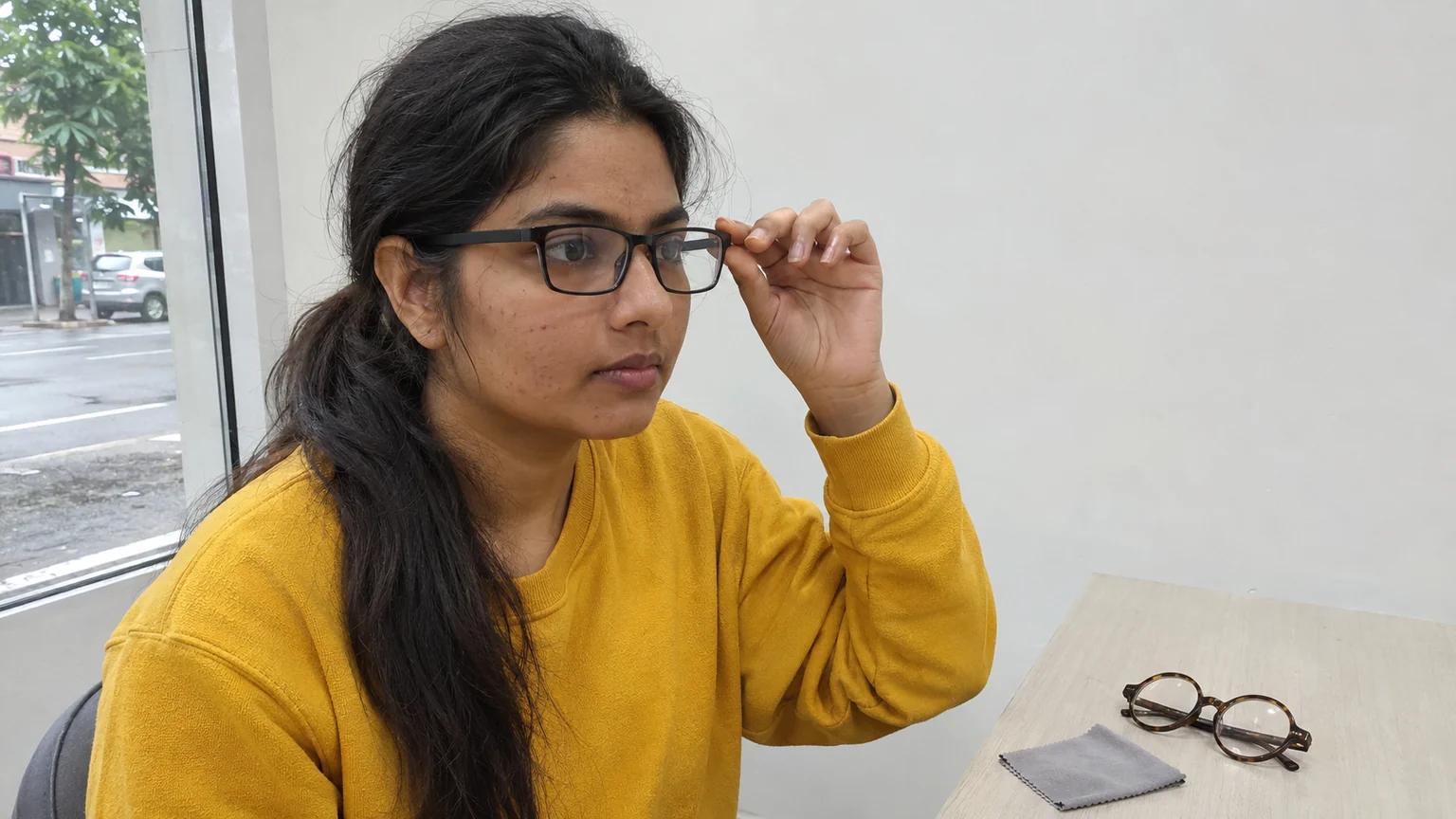
At the barber or the optician the label is a shared word to start from. Across 321 Reddit posts we read, most people wanted it for a haircut, fewer for a beard or glasses. Our hairstyle article works from the rule of balancing whatever is widest or longest rather than repeating it. An optician guide uses a similar idea for frames, angular ones for a round face and round or oval ones for a square face (All About Vision).
We found no study that tests whether frames or haircuts matched to a face shape this way look better than mismatched ones. In one study, long and medium-length hair raised women's attractiveness ratings against the bare face with no head hair visible, and the faces were not sorted by shape (Mesko and Bereczkei, 2004). Try frames on your face, in a shop or with a retailer's virtual try-on, and ask the barber how a cut will sit on your face before you trust a face-shape chart. The label also says nothing about how well your features work together, which is what a facial harmony score reads.
Frequently asked questions
Can my face shape change with weight or age?
It can. Women with a higher body mass index (weight relative to height) had a wider, rounder facial outline (Mayer and colleagues, 2017), and older adults had wider faces (Skomina and colleagues, 2020). Neither study followed the same faces over time.
Is a face shape app more reliable than asking a friend?
Not by itself. A measuring app applies one rule to every photo, but distance, tilt and its own borders still decide the label.
Does a beard change my face shape?
In a photo, it can hide where your chin ends (Stephan and colleagues, 2022). Judge the shape from a clean-shaven photo.
See which face shape your photo gets
Run a free face analysis without an account. The photo is deleted once it is read.
Last updated: November 12, 2026