Face · 8 min read
Face Symmetry: Why Selfies Make Your Face Look Uneven
Free, no account needed. Try it free
Short answer
Your face is probably less uneven than that selfie makes it look. Every healthy face differs a little between its two sides, typically by a few millimeters and most toward the jaw, and a close-range selfie with a slightly turned head adds a gap the face itself does not have. Retake the photo facing the camera straight on from about 1.5 m, with a friend or a timer, and judge that one.
One eye lower, one side of the jaw wider
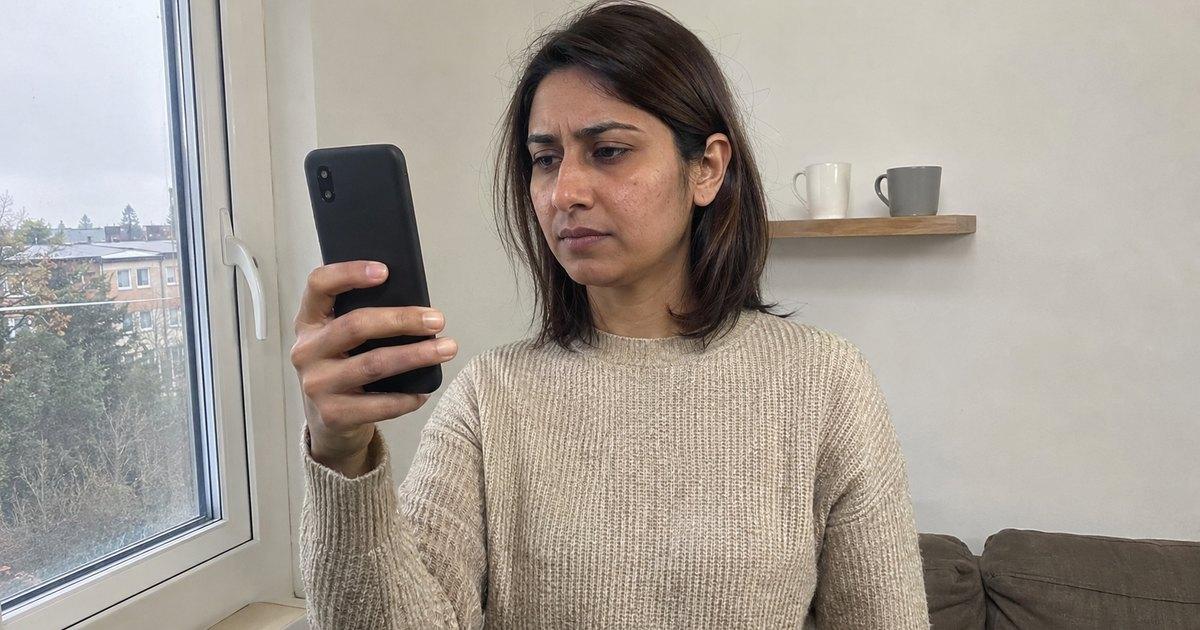
You open the front camera and something looks off. One eye sits a touch lower than the other, and the jaw seems to flare out further on one side. Once you have seen it, you find it in every photo. Some of it is your face, and some of it is the camera.
We at Objektiv, the photo analysis app behind this blog, measured 12 AI-generated example portraits to see how much the photo moves a symmetry number.
How uneven a normal face is
Ferrario and colleagues measured 80 healthy young adults in 3D in 1994, and every one of them had some asymmetry, most of it in the middle and lower face.
A later study by the same group, of 314 people aged 12 to 56, turned up slight asymmetry in men and women of every age group. There was no clear difference in the average amount between the sexes or the age groups. The jaw angle and the cheekbones were among the most uneven points.
Hwang and colleagues (2012) compared the left and right side of 48 adults on 3D scans and found average gaps of 0.6 to 4.6 mm, depending on the point, larger toward the lower and outer face.
In a 2017 review of perception studies, Wang and colleagues report that other people start to spot a difference at about 2 mm in eyelid height and about 6 mm at the chin. When Naini and colleagues (2012) shifted the jaw and chin on face images, a 5 mm shift went largely unnoticed and a 10 mm shift stood out.
Why a selfie looks worse than the mirror
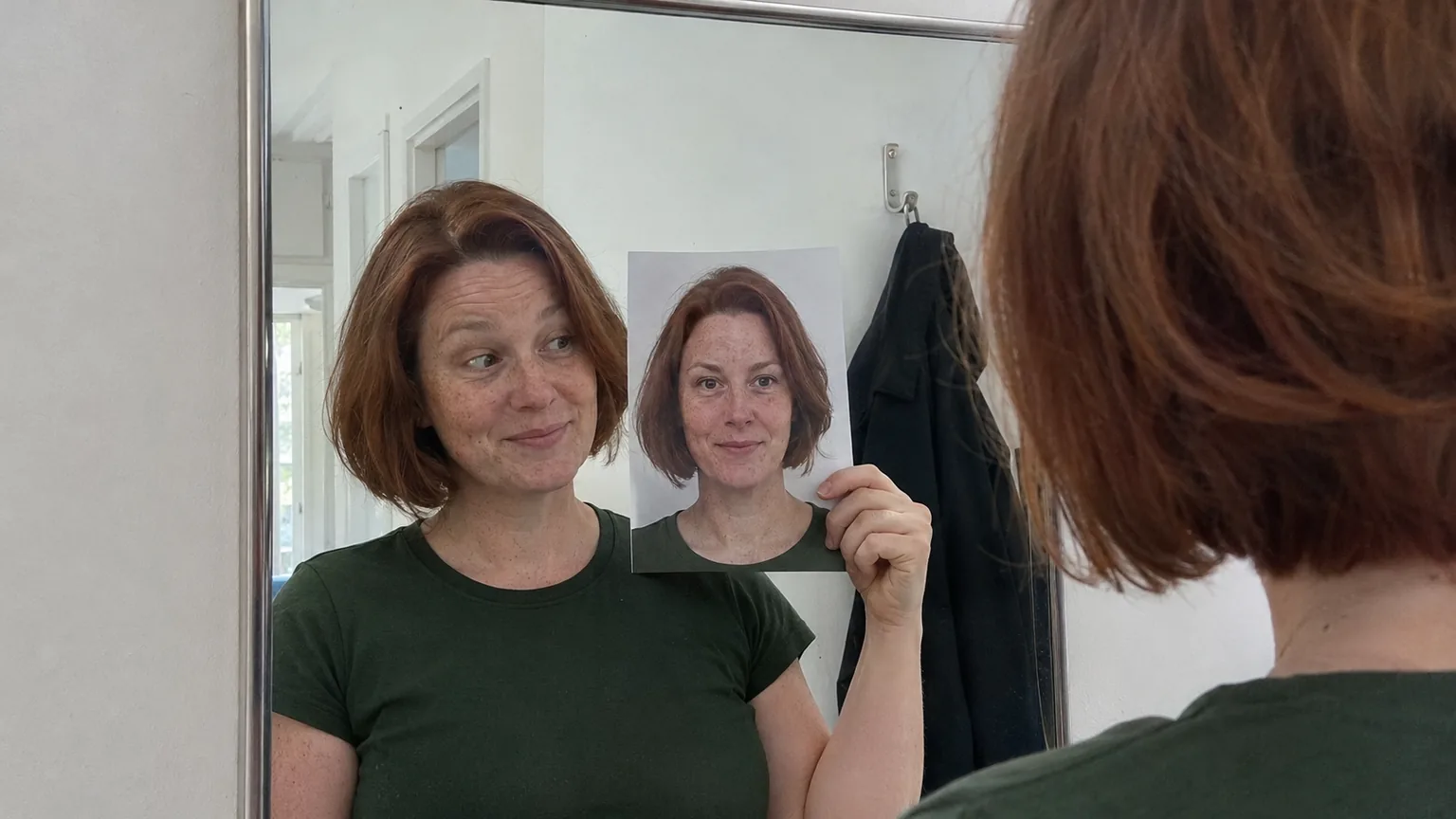
Head turn is the big one. Weiss and colleagues (2020) point out that even a perfectly symmetrical head, turned slightly left or right, shows different distances on its two halves in a photo. Measure points on that photo, and the asymmetry score rises with the turn, though the head itself is even. A slight turn is easy to miss in your own selfie, and it makes one side of the face look wider than the other.
Distance can add to it. Ward and colleagues (2018) worked out the geometry of a selfie. At about 30 cm, the nose looks around 30 percent wider relative to the cheekbones than in a photo taken from far away, and at 1.5 m the effect essentially disappears. Close range enlarges whatever is nearest to the lens, so with the head slightly turned, the nearer side of the face looks larger too.
The face you know best is the reversed one you see every morning, and a photo shows it the other way round. Mita, Dermer and Knight (1977) photographed women and printed each photo both ways. The women preferred their mirror version, while their friends and partners leaned toward the true one. Part of what bothers you in a photo is unfamiliarity.
One turned head among 12 measured photos
We measured the main photo on 12 of our example pages with the same measurement our face analysis uses. Because the faces are generated, they say nothing about how uneven real faces are, only about what the pose in one photo does to the number. The measurement mirrors matching points of the left and right side, such as the eye corners and the jaw, across the middle of the face and reports how far they miss each other on average, as a share of the cheekbone width. A perfect mirror image would read 0. A share of a width in a photo is not a length in millimeters, so these numbers do not line up with the studies above.
- 11 of the 12 photos face the camera almost straight on, and they read between 0.37 and 2.02 percent.
- The one portrait with a clearly turned head read 10.3 percent, against 2.02 for the next highest.
One photo cannot prove that the turn caused that number. Head pose is a known source of error in this kind of measurement, as Weiss and colleagues showed, and in this set the one turned head came with the one high number.
Does a more symmetrical face look better?
Somewhat, and how much depends on how the faces are shown. A 2006 review by Rhodes, which pooled earlier studies in meta-analyses, concluded that symmetry is attractive in male and female faces and across cultures. Much of what is known about symmetry and attractiveness comes from studies that asked people to pick between two versions of a face side by side.
Jones and Jaeger (2019) tested how well that holds up, with 109 female faces. Side by side, the symmetrical version was picked 53 percent of the time, where chance is 50, a margin the authors call small. When people rated the faces one at a time on a scale of 1 to 7, closer to how you meet faces in daily life, the normal versions averaged 3.02 and the symmetrical ones 3.00, in effect the same.
In Weiss and colleagues' study, where 81 adults rated 160 face photos, attractiveness ratings went along with how far the head was tipped down or up, not with how asymmetric the face was, and faces tipped down were rated more attractive.
A slightly wider jaw side is unlikely to decide how attractive you look. Our article on the facial harmony score covers what else goes into that judgment.
What a face symmetry test measures
A symmetry app or an online check can show you how two photos taken the same way compare, and a selfie that reads unusually uneven is a reason to check the pose. It cannot tell you how attractive or healthy your face is, or anything about your worth.
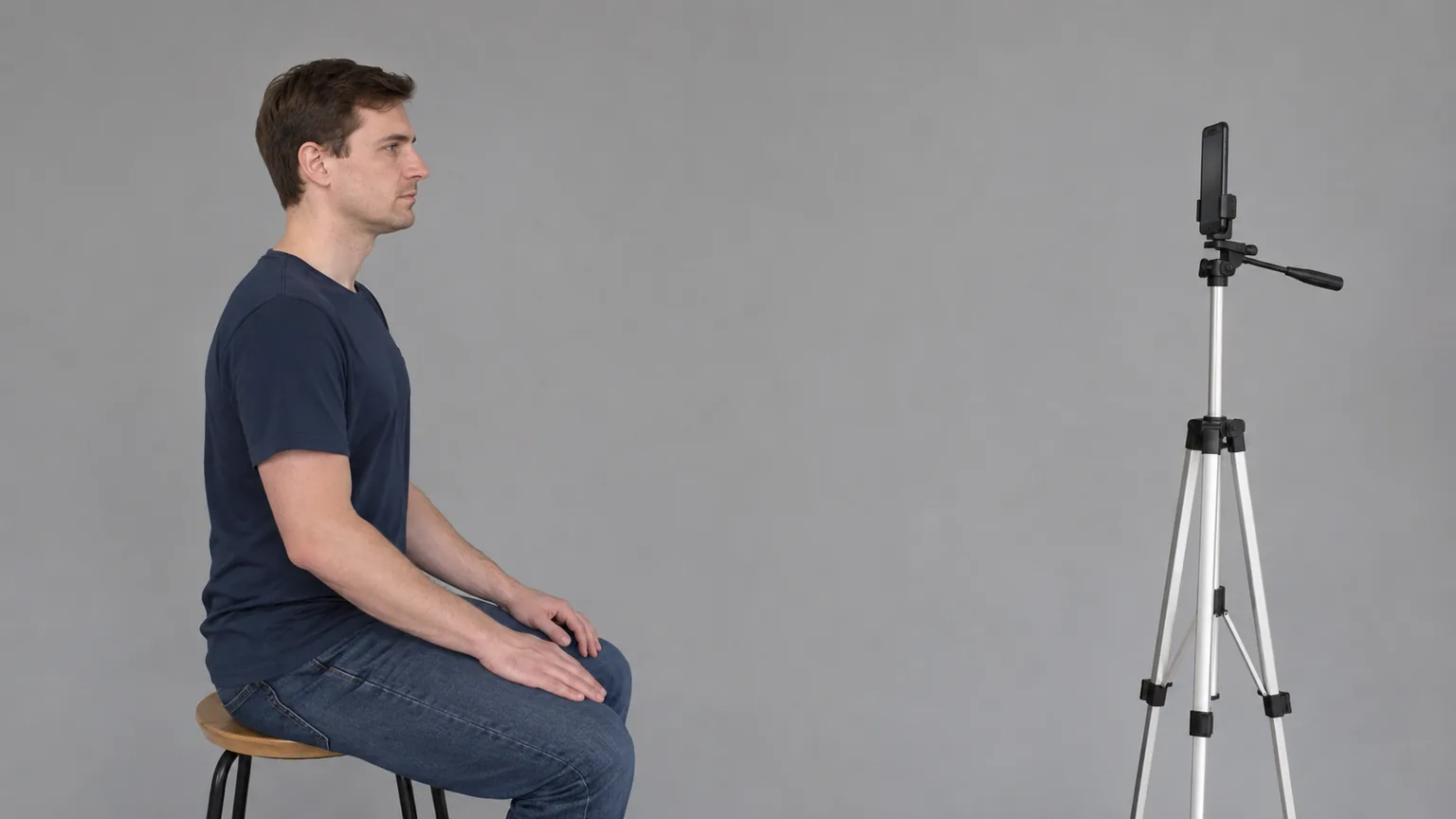
Take the photo this way, whether you check symmetry or work out your face shape:
- Face the camera straight on, nose pointing at the lens.
- Have someone take the photo from about 1.5 m, or prop the phone up and use a timer.
- Keep your head level.
- Use even light from the front.
When an uneven face needs a doctor
If one side of your face starts to droop, that needs a doctor at once. The NHS, the UK's public health service, lists one side of the face drooping as a sign of a stroke and says to call 999. Elsewhere, call your local emergency number. Bell's palsy, a weakness of one side of the face, is another cause the NHS describes.
Check your symmetry on a straight photo
Take one photo by the rules above and put it next to the selfie that worried you. Treat any symmetry number as a read of the photo it came from.
Frequently asked questions
Can I make my face more symmetrical?
For most people there is little to change. Differences of a few millimeters are normal. What you can change easily is the photo, through pose and distance.
Would my face look better if it were perfectly symmetrical?
Probably not. In Jones and Jaeger's study, a perfectly symmetrical version won side by side by a little and made no real difference when rated on its own. Swaddle and Cuthill (1995) evened out the two sides of faces while the features kept the same average size, and people rated the results as less attractive. Wang and colleagues' review notes that perfect symmetry looks disconcerting and that some asymmetry is normal.
Is the right or the left side of the face usually bigger?
The right side was the larger one in Ferrario and colleagues' 1994 study of 80 healthy young adults. That is one sample, so your face may lean the other way. The side that looks bigger in a selfie can also be the one nearer the camera.
This article is general information, not medical, legal or financial advice.
See how a straight photo of you reads
Run a free face analysis without an account. The photo is deleted once it is read.
Last updated: November 15, 2026