Face · 8 min read
Golden Ratio Face: Why 1.618 Does Not Decide Your Looks
Free, no account needed. Try it free
Short answer
No, 1.618 does not decide how good a face looks. Studies that measured real faces and collected attractiveness ratings found that few golden ratios track the ratings, and the proportions people prefer match the average of many faces rather than 1.618. When researchers changed only the spacing of the features within the same face, raters liked it best at the average spacing, not at the spacing the golden ratio predicts (Pallett and colleagues, 2010). Read a golden ratio score as a measurement of one photo.
A score built on one number
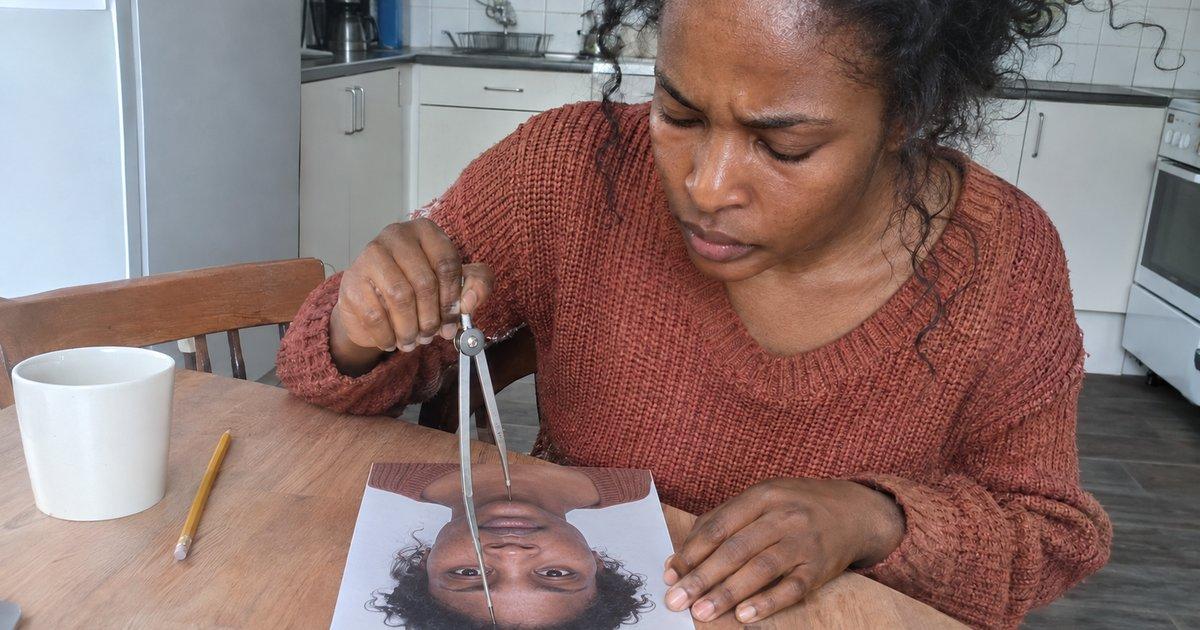
A golden ratio face test marks points on a photo and compares the distances between them with 1.618. Maybe you ran one on your own face, or watched a video that ranked celebrities by it. A high result feels like proof, a low one like a verdict on your face.
The number itself is old and exact. Euclid described a line cut so that the whole is to the longer part as the longer part is to the shorter, and that ratio works out to 1.618, later called the golden ratio or the divine proportion.
Where the beauty claim comes from
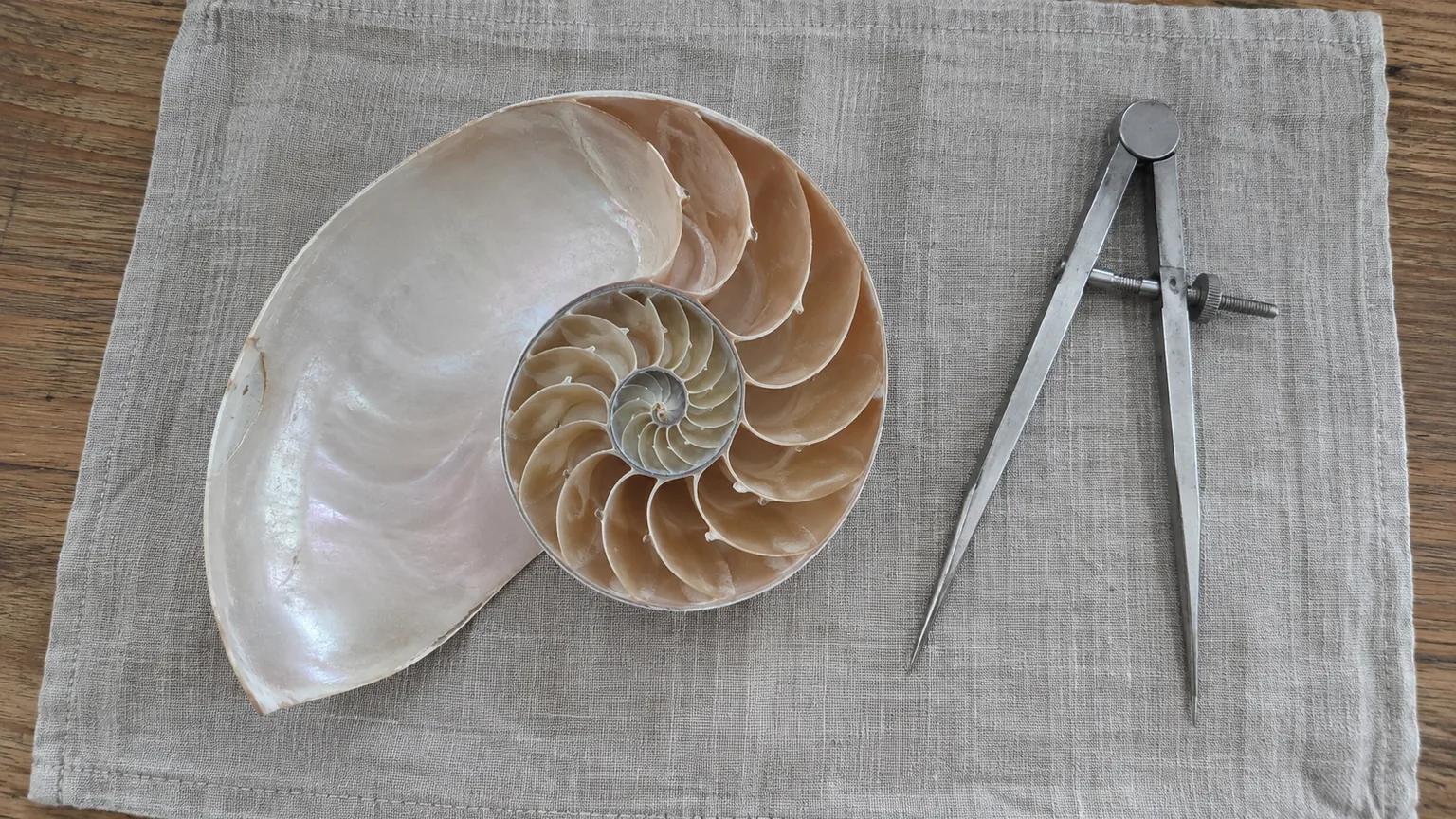
The popular story says the ancient Greeks and Leonardo da Vinci built beauty on 1.618. The record behind it is thin. Mario Livio, an astrophysicist and author of a book on the golden ratio, notes that no document shows Leonardo used it in the Mona Lisa. The mathematician George Markowsky (1992) found nothing in Leonardo's biographies to show he used it in any painting or drawing, apart from the drawings he made for Luca Pacioli's book about the ratio. The Parthenon is often drawn inside a golden rectangle. Yet the published dimensions Markowsky checked make its front about 2.25 times as wide as it is high, or 1.71 times with the height taken to the peak of the roof. He treated only ratios from 1.58 to 1.66 as possibly golden, just over 2 percent either side of 1.618.
The face claims are newer. Ricketts (1982) described 12 facial ratios that matched the golden ratio in faces he considered ideal. In 1997 Stephen Marquardt was granted a patent on a mask meant for surgical, cosmetic and identification purposes. The mask is a grid of pentagons sized by the same ratio and laid over a photo of a face. He built it from the faces of fashion models. Both start from faces already judged beautiful and fit the ratio to them.
Studies that compared golden ratios with ratings
Kiekens and colleagues (2008) had 76 adults who were not orthodontists score photos of 64 white adolescents, and on each face measured 19 proportions derived from Ricketts' golden ratios. Only 4 of the 19 were linked to the scores. Together those 4 explained 16 percent of the spread in scores, a share the authors judged too small to matter in practice. Most of what made one face score higher than another came from other things.
Among former orthodontic patients studied by Pancherz and colleagues (2010), the 34 picked as attractive came closer to the golden values than the 34 picked as unattractive. Yet in those patients and in 90 magazine cover models, every measured distance still varied widely from its golden value.
The two tests of Marquardt's mask point in different directions. Bashour (2006) found that faces closer to the mask got higher ratings, and read that as support for averageness, meaning how close a face comes to the typical face of a population. In Holland's 2008 analysis, the mask best describes white women with masculinized features, as seen in fashion models, and runs against what most people prefer.
One test kept everything else equal. Pallett, Link and Lee (2010) took photos of white women and changed only the spacing of the features, so each face competed against versions of itself. Across four experiments with 126 students, a face looked best when the distance from eyes to mouth was about 36 percent of its length, measured from hairline to chin, and the distance between the eyes about 46 percent of its width. Those are the proportions of an average face. A golden face would put both at 38 percent, the share the shorter part takes when a length is cut in the golden ratio. The study tested the 36 and the 46 percent against 38, and both gaps came out larger than chance would explain.
The face as a golden rectangle
The simplest version of the claim treats the face as a rectangle. Divide the length from hairline to chin by the width at the cheekbones, and a face shaped like a golden rectangle would come out at 1.618. Two studies measured this ratio on real people.
- 42 white celebrities chosen as attractive average 1.38 for the 21 women and 1.39 for the 21 men (Liu and colleagues, 2023).
- 75 dental students aged 17 to 19 split three ways. The study counted 14 in a band from 1.60 to 1.69, 50 below it and 11 above it (Saraswathi, 2007).
Most faces in both studies fall below the golden value on this measure, and the celebrities' averages sit well below it.
Objektiv, the face analysis app behind this blog, shows 17 portraits in its example gallery. We measured 12 of them, from the hairline to the chin against the width at the cheekbones. The portraits are AI-generated, so all they show is how this measurement behaves. The 12 run from 1.39 to 1.59, with the middle value at 1.44. All of them are below 1.618, and only the closest falls inside Markowsky's range.
The portrait of Hiroshi Sato, at 1.59, is the only one of the 12 whose hairline has receded at the front and not only at the temples. A hairline that starts higher adds to any length measured from it, so a hairline receded at the front pushes this number up toward 1.618.
Hairline, camera distance and the points a test picks
Three things can move a golden ratio score while your face stays the same.
The hairline is the hardest point to place. Skomina and colleagues (2020) left it out of face height entirely, calling it the most variable point because hair recedes with age. Bangs that hide it or a tool that guesses where it sits change the measured length too. The authors of the spacing study above suggest that a hairstyle can change how long or wide a face looks to other people.
Bryan and colleagues (2012) photographed the same 18 faces from 45 cm and from 135 cm at the same moment. Up close, faces came out narrower for their height, which pushes a length-to-width ratio up. Our face symmetry article shows how distance and a slightly turned head change a selfie.
The celebrity study that found 1.38 against cheekbone width got 1.61 for the women when it divided the same length by jaw width. Livio makes the general point that a face offers hundreds of lengths, and anyone who tries enough pairs will find golden ratios among them.
Run the test from two distances
Take two photos straight on at eye level, one from about 45 cm and one from about 135 cm, the two distances of the camera study above, and run both through the same test. If the two scores differ, the gap came from the photos or the test, not from your face.
For the wider research on proportion and attractiveness, read our facial harmony article.
Frequently asked questions
Why 1.618 and not 1.5 or 1.75?
The psychologist Chris McManus (1980) called it very unclear whether the golden ratio itself matters as opposed to ratios such as 1.5, 1.6 or 1.75, though he found moderately good evidence that people prefer rectangles near golden proportions. Those experiments used rectangles, not faces.
Is there a golden ratio face shape?
Not by length against cheekbone width. Measured that way, most faces in two studies of real people sit below 1.618, faces chosen as attractive included. One of the two studies found 1.61 for attractive women when it took the width at the jaw instead. Face shape labels describe which part of the face is widest and how long it looks, and charts draw the borders between them in different places, as our face shape article explains.
Does the Marquardt mask fit every face?
It fits some faces poorly. Holland (2008) found it ill-suited to non-European faces, especially sub-Saharan African and East Asian ones. In 150 South Indian faces selected as attractive, most of the women's faces and just over half of the men's were wider than the mask at the cheekbones and the jaw (Veerala and colleagues, 2016).
See what a straight photo of your face shows
Run a free face analysis without an account. The photo is deleted once it is read.
Last updated: November 21, 2026